
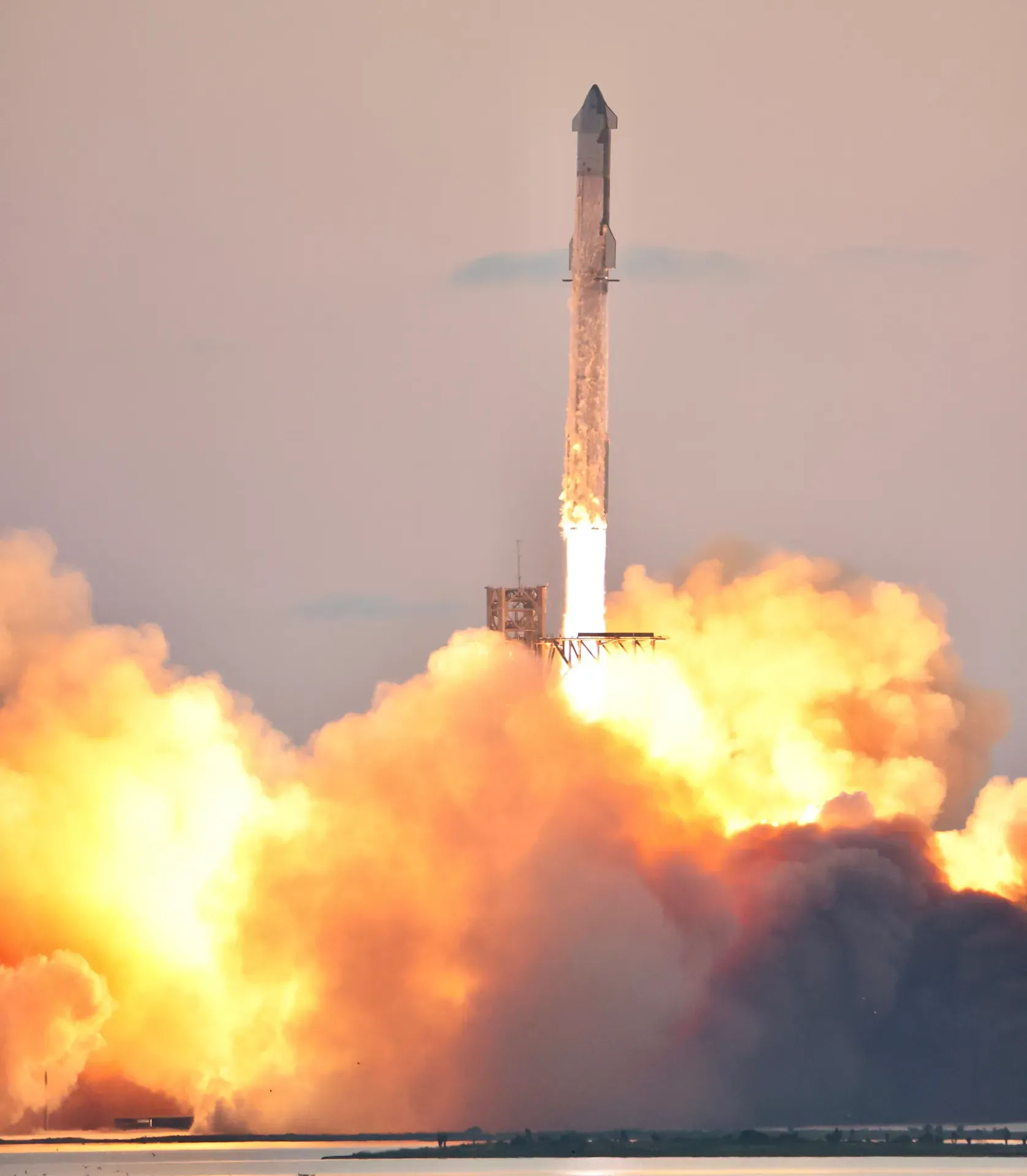
Two-stage launch vehicle, designed for full reuse
Starship
A fully reusable two-stage launch system in active development, with 33 Raptor engines on the Super Heavy booster and six on the Starship upper stage, burning liquid methane and liquid oxygen. Figures are for the current design on SpaceX's Starship page (October 2026). SpaceX gives no total liftoff mass, so the mass shown is the two stages' published propellant capacity, a lower bound.
- Height
- 124m
- Liftoff thrust
- 18,100,000lbf
- Payload to LEO
- 100,000+kg
- Reusable
- First flight
- 2023

Overview
- Manufacturer
- SpaceX
- Country
- United States
- First flight
- Stages
- 2
- Engines
- 39 in total
Engineering analysis
Reusability
Recovering Starship means carrying hardware and propellant an expendable vehicle would not need: thermal protection, aerodynamic flaps and landing reserves. SpaceX’s lunar lander variant leaves out the Earth-return hardware, so reuse directly changes the vehicle’s mass and layout.
Mission design
Starship’s lunar missions depend on moving cryogenic propellant in orbit. NASA and SpaceX are developing depot and tanker flights so a vehicle can launch to low Earth orbit, refill there, and leave with the propellant needed for the Moon or other high-energy missions.
Specifications
Size, mass and thrust at liftoff as published, with the basis of each figure.
Starship key specifications
| Parameter | Figure | Basis |
|---|---|---|
| Height | 124 m406.8 ft | |
| Liftoff mass | 5,250+ t11,570,000+ lbPublished minimum | Published minimum |
| Liftoff thrust | 18,100,000 lbf80,510 kNApproximate | Approximate |
Published figures are shown as recorded. The figure under each one, in the other unit system, is converted by ORBIX and rounded to four significant figures or one decimal place, whichever is coarser. A figure with no qualifier is a published or nominal value. A plus sign after a figure marks a published minimum.
Stages
Each stage element in flight order, with its propellants, engines and whether it is designed to be recovered.
Starship stages
| Element | Stage | Propellants | Engines | Recovery |
|---|---|---|---|---|
| Super Heavy booster (33-engine flight architecture)Liquid methane with liquid oxygen33 × RaptorDesigned for recovery | 1 | Liquid methane with liquid oxygen | 33 × Raptor | Designed for recovery |
| Starship upper stage (six-engine flight architecture)Liquid methane with liquid oxygen3 × Raptor sea-level, 3 × Raptor VacuumDesigned for recovery | 2 | Liquid methane with liquid oxygen | 3 × Raptor sea-level, 3 × Raptor Vacuum | Designed for recovery |
Propulsion
Thrust is per engine, where a figure is published. A rocket engine produces more thrust in vacuum because no outside air pressure acts against its exhaust.
Starship engines by stage
| Engine | Sea level | Vacuum | Stage | Cycle |
|---|---|---|---|---|
| Raptor33 engines, SpaceXSuper Heavy booster (33-engine flight architecture)Full-flow staged combustion | 551,000 lbf2,451 kNApproximate | Not published | Super Heavy booster (33-engine flight architecture) | Full-flow staged combustion |
| Raptor sea-level3 engines, SpaceXStarship upper stage (six-engine flight architecture)Full-flow staged combustion | 551,000 lbf2,451 kNApproximate | Not published | Starship upper stage (six-engine flight architecture) | Full-flow staged combustion |
| Raptor Vacuum3 engines, SpaceXStarship upper stage (six-engine flight architecture)Full-flow staged combustion | Not published | 606,000 lbf2,696 kNApproximate | Starship upper stage (six-engine flight architecture) | Full-flow staged combustion |
Performance
Payload mass depends on the destination orbit and on whether boosters are recovered, so each figure is tied to both.
Starship payload capability
| Destination | Payload | Configuration |
|---|---|---|
| Low Earth orbit (LEO)Reusable | 100,000+ kg220,500+ lbPublished minimum | Reusable |
A plus sign after a figure marks a published minimum. The record also lists Trans-lunar injection (TLI) and Earth escape as planned destinations, with no published payload figure.
Photographs
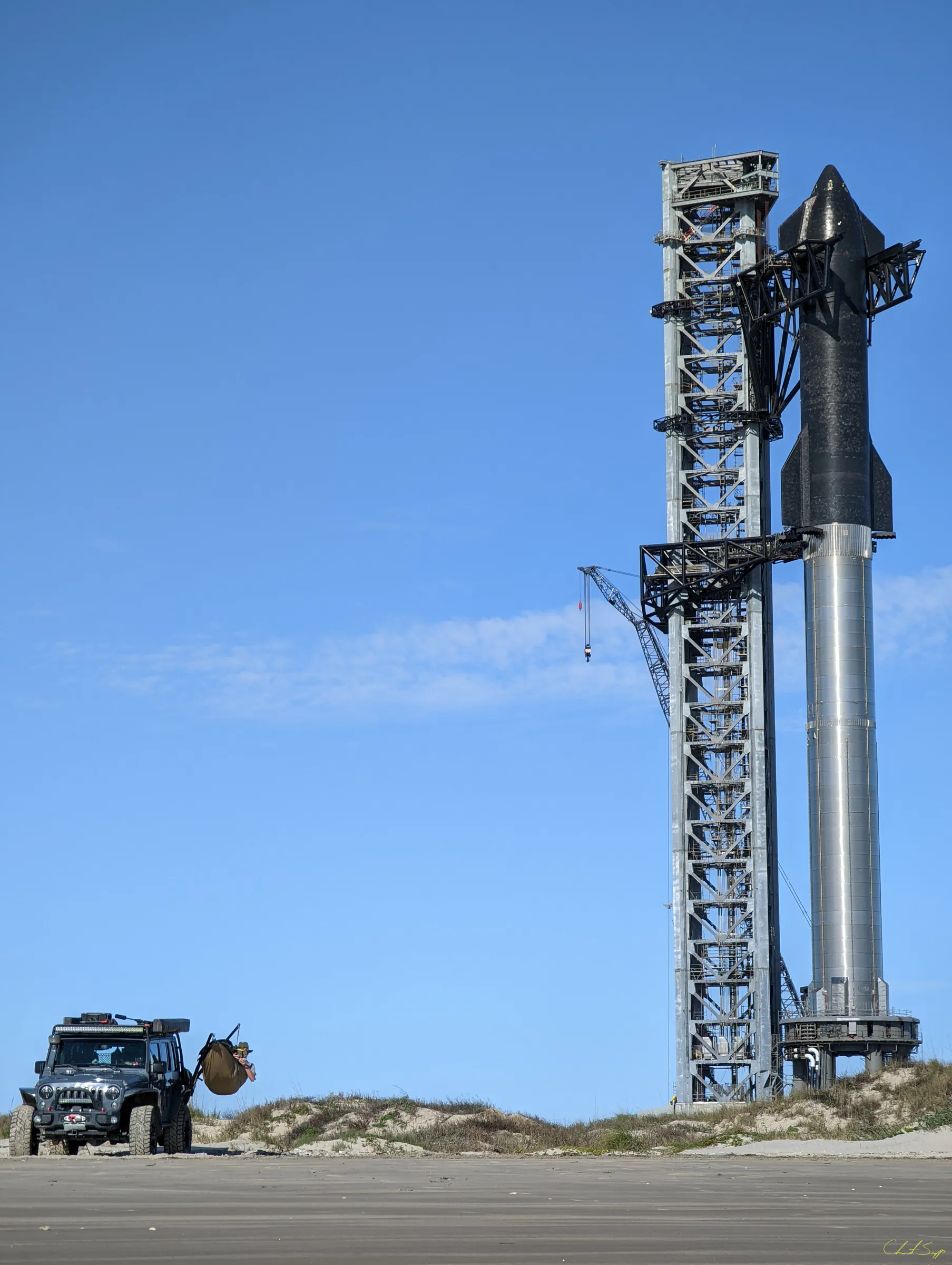
Starship SN20 on Super Heavy BN4, fully stacked at Starbase, Texas, with a Jeep for scale, March 2022. Photo: Hotel Pika. CC BY-SA 2.0. Source file. 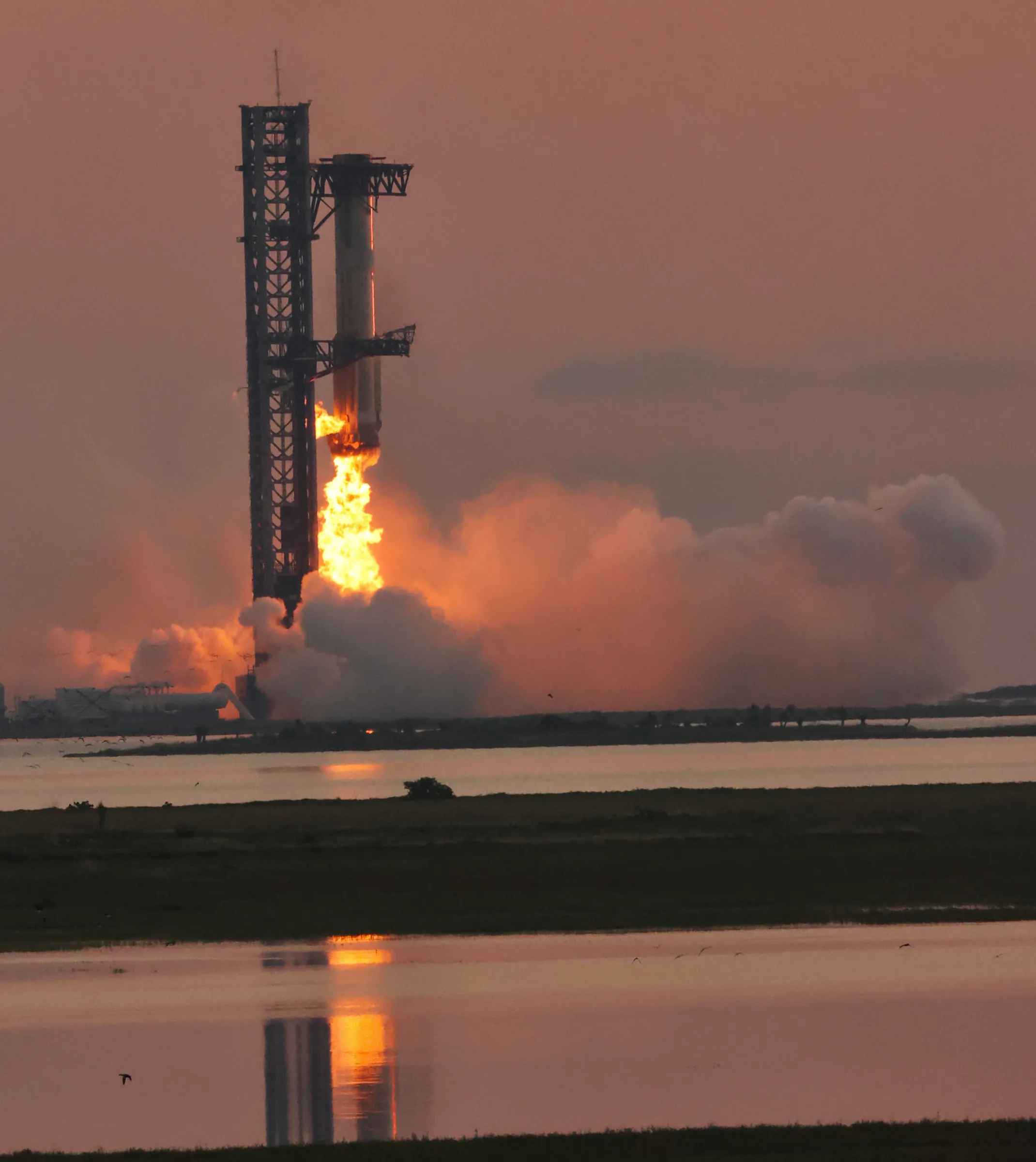
The Super Heavy booster being caught by the launch tower on Starship's fifth flight test, October 2024. Photo: Steve Jurvetson. CC BY 2.0. Source file. 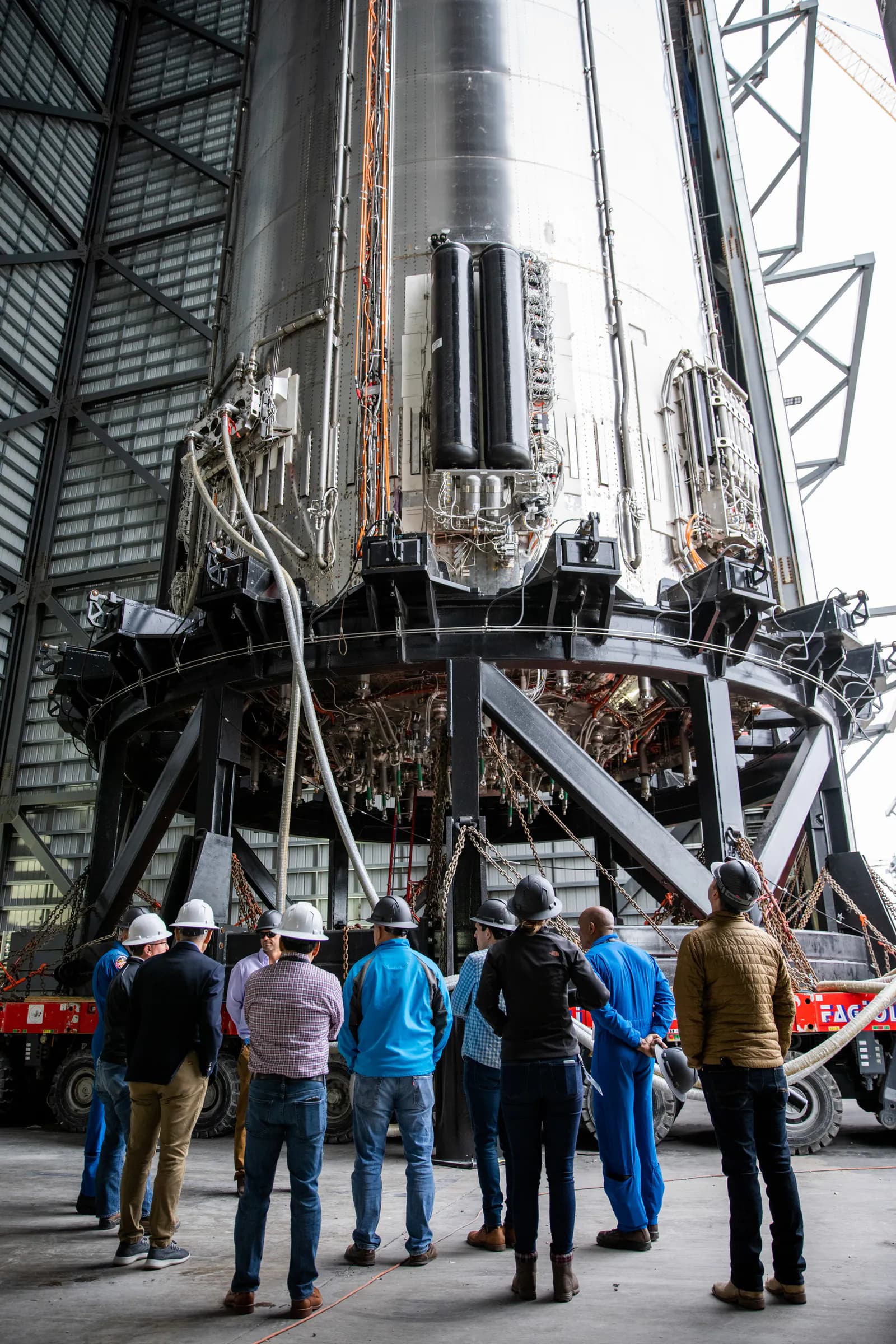
NASA visitors under a Super Heavy booster at SpaceX, December 2021. The engine mounts and wiring are visible. Photo: NASA. Public domain. Source file.


