
Two-stage launch vehicle, partially reusable
Falcon Heavy
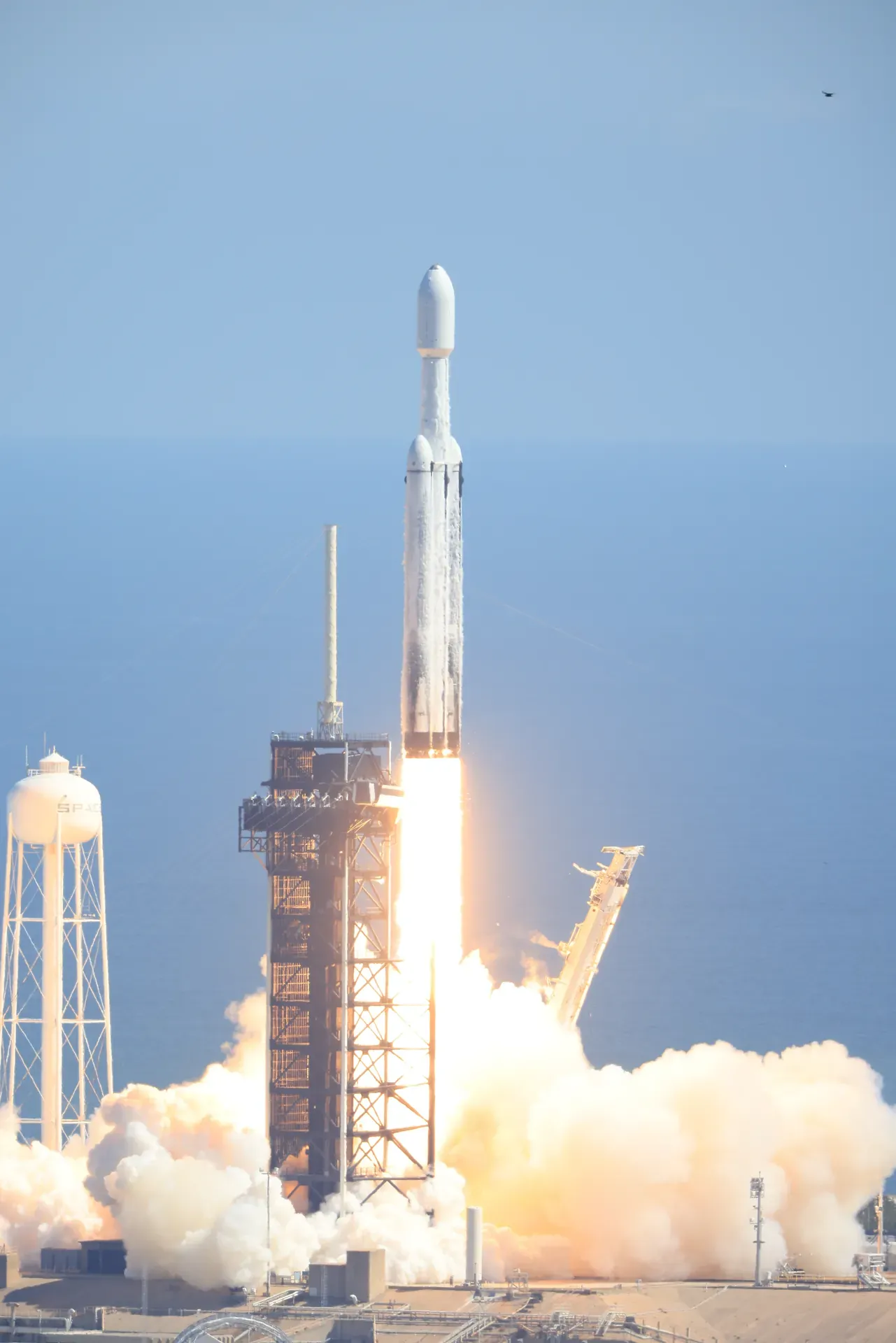
A partially reusable heavy-lift launch vehicle built around three modified Falcon 9 first-stage cores and a common Falcon upper stage.
- Height
- 70m
- Liftoff thrust
- 5,000,000+lbf
- Payload to LEO
- 63,800kg
- Expendable
- First flight
- 2018

Overview
- Manufacturer
- SpaceX
- Country
- United States
- First flight
- Stages
- 2
- Engines
- 28 in total
Engineering analysis
Structures
Falcon Heavy joins three Falcon first-stage cores into one launch vehicle, so the side-booster separation and the longer burn of the center core have to work as one ascent. It has more than five million pounds of liftoff thrust and can lift nearly 64 tonnes to LEO.
Reusability
Falcon Heavy can recover and refly its side boosters, but what it recovers depends on mission energy. On some high-energy missions the side boosters land and the center core is expended, giving up reusable hardware for the velocity a demanding payload needs.
Specifications
Size, mass and thrust at liftoff as published, with the basis of each figure.
Falcon Heavy key specifications
| Parameter | Figure | Basis |
|---|---|---|
| Height | 70 m229.7 ft | |
| Liftoff mass | 1,420,788 kg3,132,000 lb | |
| Liftoff thrust | 5,000,000+ lbf22,240+ kNPublished minimum | Published minimum |
Published figures are shown as recorded. The figure under each one, in the other unit system, is converted by ORBIX and rounded to four significant figures or one decimal place, whichever is coarser. A figure with no qualifier is a published or nominal value. A plus sign after a figure marks a published minimum.
Stages
Each stage element in flight order, with its propellants, engines and whether it is designed to be recovered.
Falcon Heavy stages
| Element | Stage | Propellants | Engines | Recovery |
|---|---|---|---|---|
| Side boosters (two cores)RP-1 with liquid oxygen18 × Merlin 1DDesigned for recovery | 1 | RP-1 with liquid oxygen | 18 × Merlin 1D | Designed for recovery |
| Center coreRP-1 with liquid oxygen9 × Merlin 1DDesigned for recovery | 1 | RP-1 with liquid oxygen | 9 × Merlin 1D | Designed for recovery |
| Second stageRP-1 with liquid oxygen1 × Merlin VacuumExpended | 2 | RP-1 with liquid oxygen | 1 × Merlin Vacuum | Expended |
Propulsion
Thrust is per engine, where a figure is published. A rocket engine produces more thrust in vacuum because no outside air pressure acts against its exhaust.
Falcon Heavy engines by stage
| Engine | Sea level | Vacuum | Stage | Cycle |
|---|---|---|---|---|
| Merlin 1D18 engines, SpaceXSide boosters (two cores)Gas generator | 845 kN190,000 lbfPublished maximum | Not published | Side boosters (two cores) | Gas generator |
| Merlin 1D9 engines, SpaceXCenter coreGas generator | 845 kN190,000 lbfPublished maximum | Not published | Center core | Gas generator |
| Merlin Vacuum1 engine, SpaceXSecond stageGas generator | Not published | 981 kN220,500 lbf | Second stage | Gas generator |
Performance
Payload mass depends on the destination orbit and on whether boosters are recovered, so each figure is tied to both.
Falcon Heavy payload capability
| Destination | Payload | Configuration |
|---|---|---|
| Low Earth orbit (LEO)Expendable | 63,800 kg140,700 lbPublished maximum | Expendable |
| Geostationary transfer orbit (GTO)Expendable | 26,700 kg58,860 lbPublished maximum | Expendable |
The record also lists Geostationary Earth orbit (GEO) and Earth escape as supported destinations, with no published payload figure.
Photographs
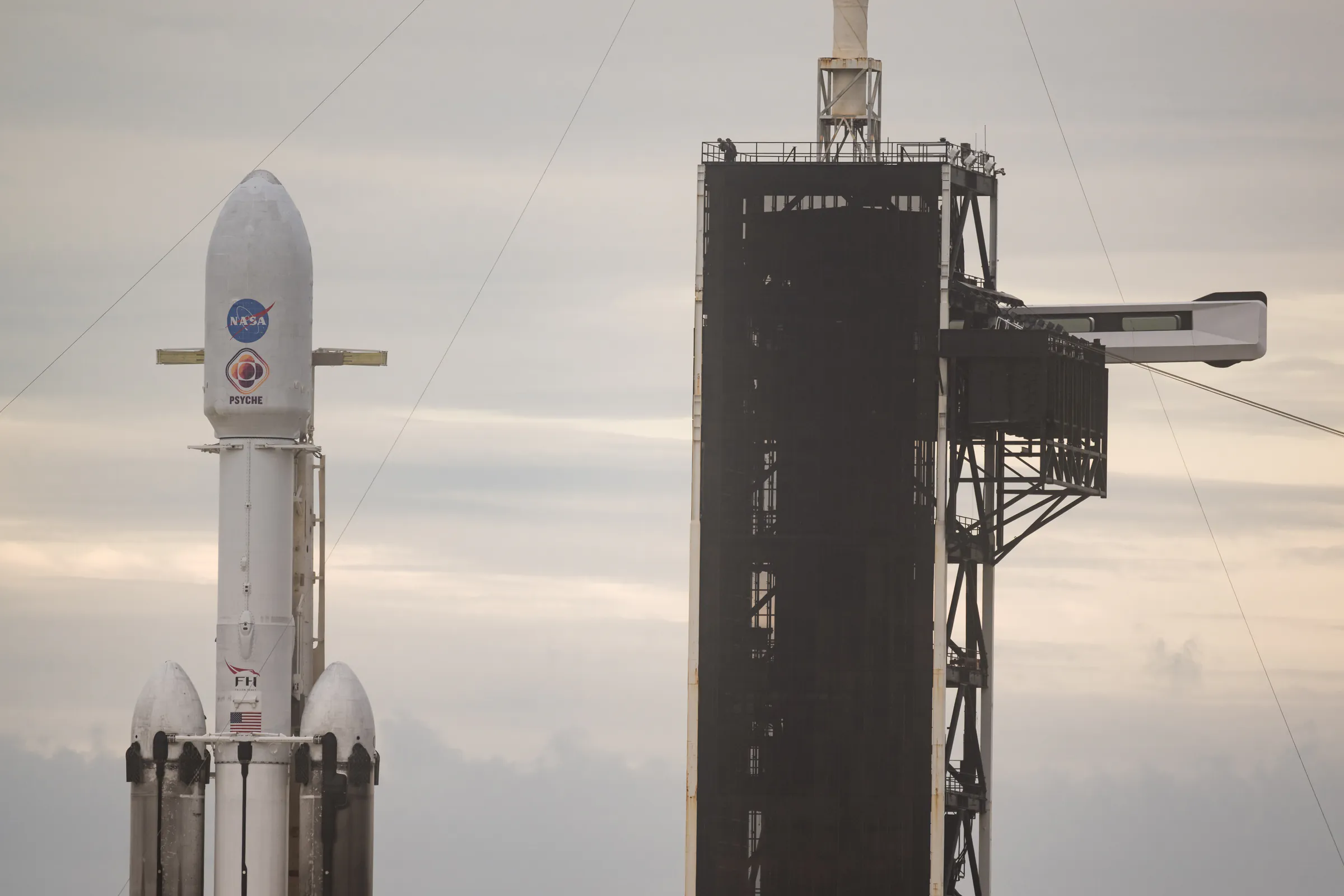
Falcon Heavy with the Psyche spacecraft at Launch Complex 39A, October 2023. Photo: NASA/Aubrey Gemignani. Public domain. Source file. 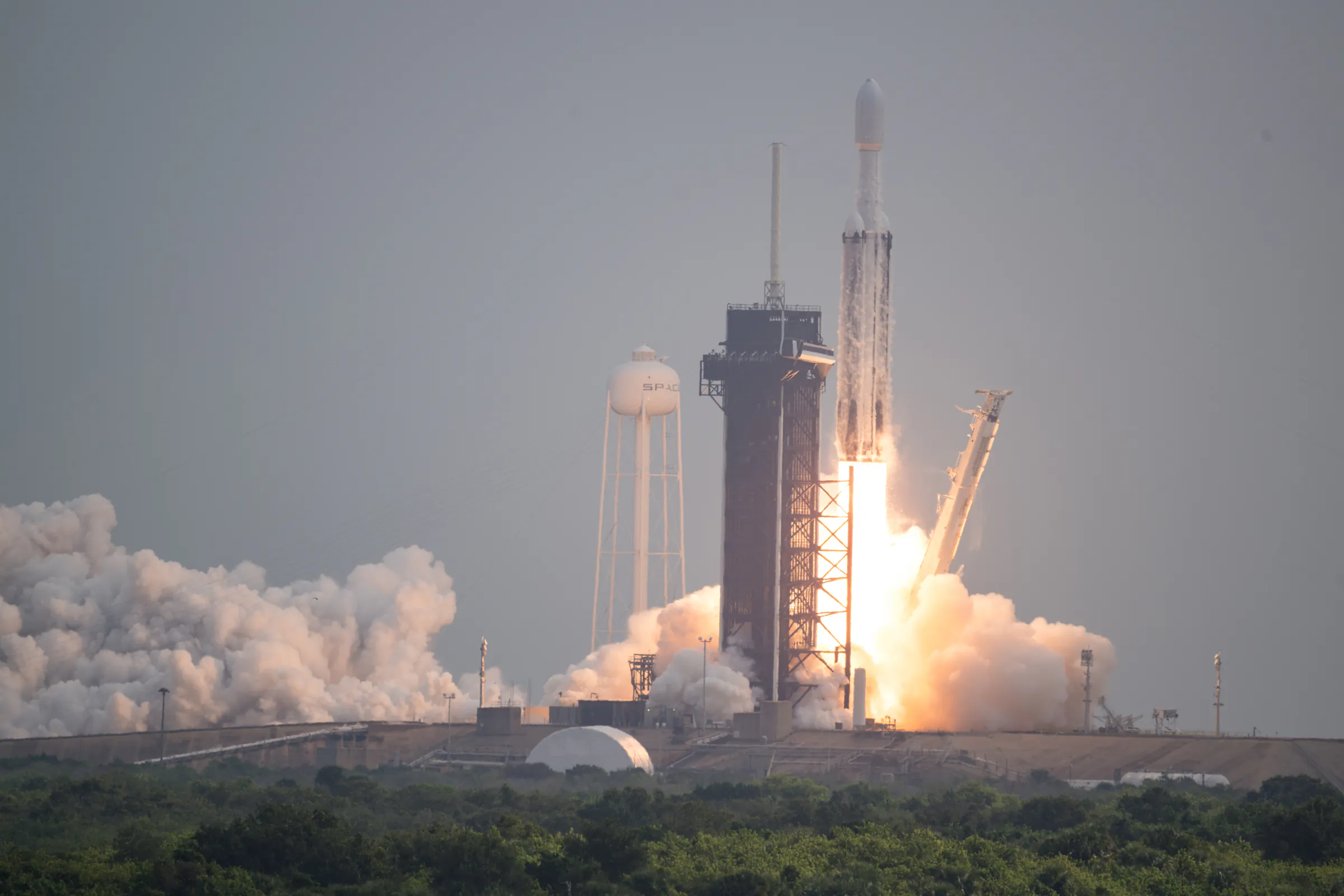
Falcon Heavy launching the Psyche mission from Launch Complex 39A, October 2023. Photo: NASA/Aubrey Gemignani. Public domain. Source file.

