
Two-stage launch vehicle, expendable
Space Launch System (SLS)
NASA's super heavy-lift launch vehicle represented in the flown Block 1 crew configuration with twin boosters, a four-engine core, and the ICPS upper stage.
- Height
- 98.3m
- Liftoff thrust
- 39,144kN
- Payload to LEO
- 95,000+kg
- Expendable
- First flight
- 2022
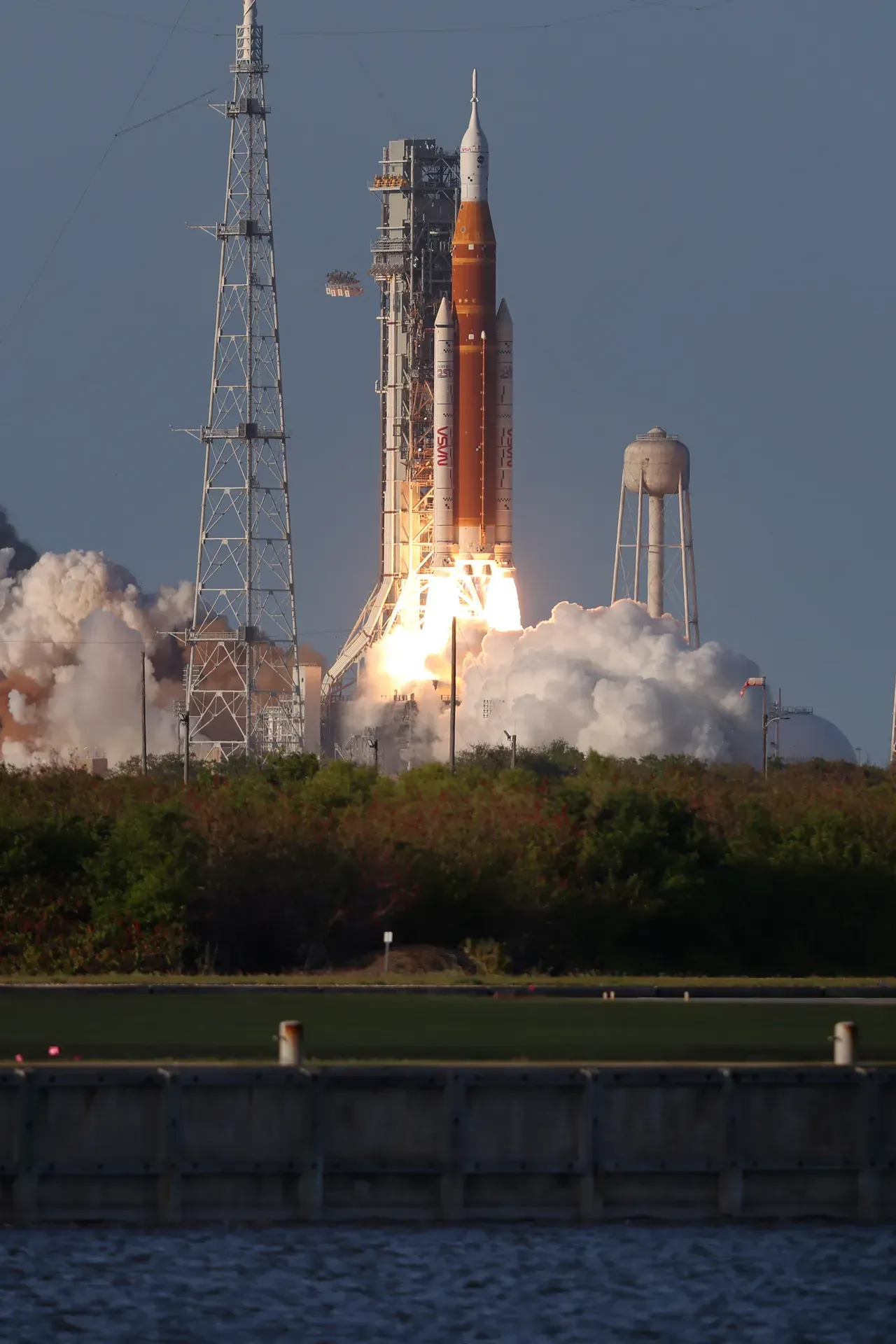

Overview
- Manufacturer
- NASA and industry partners
- Country
- United States
- First flight
- Stages
- 2
- Engines and motors
- 7 in total
Engineering analysis
Staging
SLS Block 1 pairs two five-segment solid boosters with four RS-25 engines on the core stage. The boosters give most of the liftoff thrust, and the hydrogen-fueled RS-25s keep powering the core after the boosters separate.
Systems engineering
SLS was designed to evolve. Block 1 uses the Interim Cryogenic Propulsion Stage; Block 1B replaces it with the more capable Exploration Upper Stage, and Block 2 adds evolved boosters. Each step raises deep-space payload capability on the same core design.
Specifications
Size, mass and thrust at liftoff as published, with the basis of each figure.
Space Launch System (SLS) key specifications
| Parameter | Figure | Basis |
|---|---|---|
| Height | 98.3 m322.5 ft | |
| Liftoff mass | 2,608 t5,750,000 lb | |
| Liftoff thrust | 39,144 kN8,800,000 lbfPublished maximum | Published maximum |
Published figures are shown as recorded. The figure under each one, in the other unit system, is converted by ORBIX and rounded to four significant figures or one decimal place, whichever is coarser. A figure with no qualifier is a published or nominal value.
Stages
Each stage element in flight order, with its propellants, engines and whether it is designed to be recovered.
Space Launch System (SLS) stages
| Element | Stage | Propellants | Engines | Recovery |
|---|---|---|---|---|
| Five-segment solid rocket boostersAluminum and PBAN binder with ammonium perchlorate2 × Five-segment solid rocket motorExpended | 1 | Aluminum and PBAN binder with ammonium perchlorate | 2 × Five-segment solid rocket motor | Expended |
| Core stageLiquid hydrogen with liquid oxygen4 × RS-25Expended | 1 | Liquid hydrogen with liquid oxygen | 4 × RS-25 | Expended |
| Interim Cryogenic Propulsion StageLiquid hydrogen with liquid oxygen1 × RL10B-2Expended | 2 | Liquid hydrogen with liquid oxygen | 1 × RL10B-2 | Expended |
Propulsion
Thrust is per engine, where a figure is published. A rocket engine produces more thrust in vacuum because no outside air pressure acts against its exhaust.
Space Launch System (SLS) engines by stage
| Engine | Sea level | Vacuum | Stage | Cycle |
|---|---|---|---|---|
| Five-segment solid rocket motor2 engines, Northrop GrummanFive-segment solid rocket boostersSolid motor | 16 MN3,597,000 lbfApproximate | Not published | Five-segment solid rocket boosters | Solid motor |
| RS-254 engines, L3Harris (Aerojet Rocketdyne)Core stageStaged combustion | 1,850 kN415,900 lbfApproximate | 512,000 lbf2,277 kNPublished maximum | Core stage | Staged combustion |
| RL10B-21 engine, L3Harris (Aerojet Rocketdyne)Interim Cryogenic Propulsion StageExpander cycle | Not published | 24,750 lbf110.1 kNApproximate | Interim Cryogenic Propulsion Stage | Expander cycle |
Performance
Payload mass depends on the destination orbit and on whether boosters are recovered, so each figure is tied to both.
Space Launch System (SLS) payload capability
| Destination | Payload | Configuration |
|---|---|---|
| Low Earth orbit (LEO)Expendable | 95,000+ kg209,400+ lbPublished minimum | Expendable |
| Trans-lunar injection (TLI)Expendable | 27,000+ kg59,520+ lbPublished minimum | Expendable |
A plus sign after a figure marks a published minimum. The record also lists Earth escape as a supported destination, with no published payload figure.
Photographs
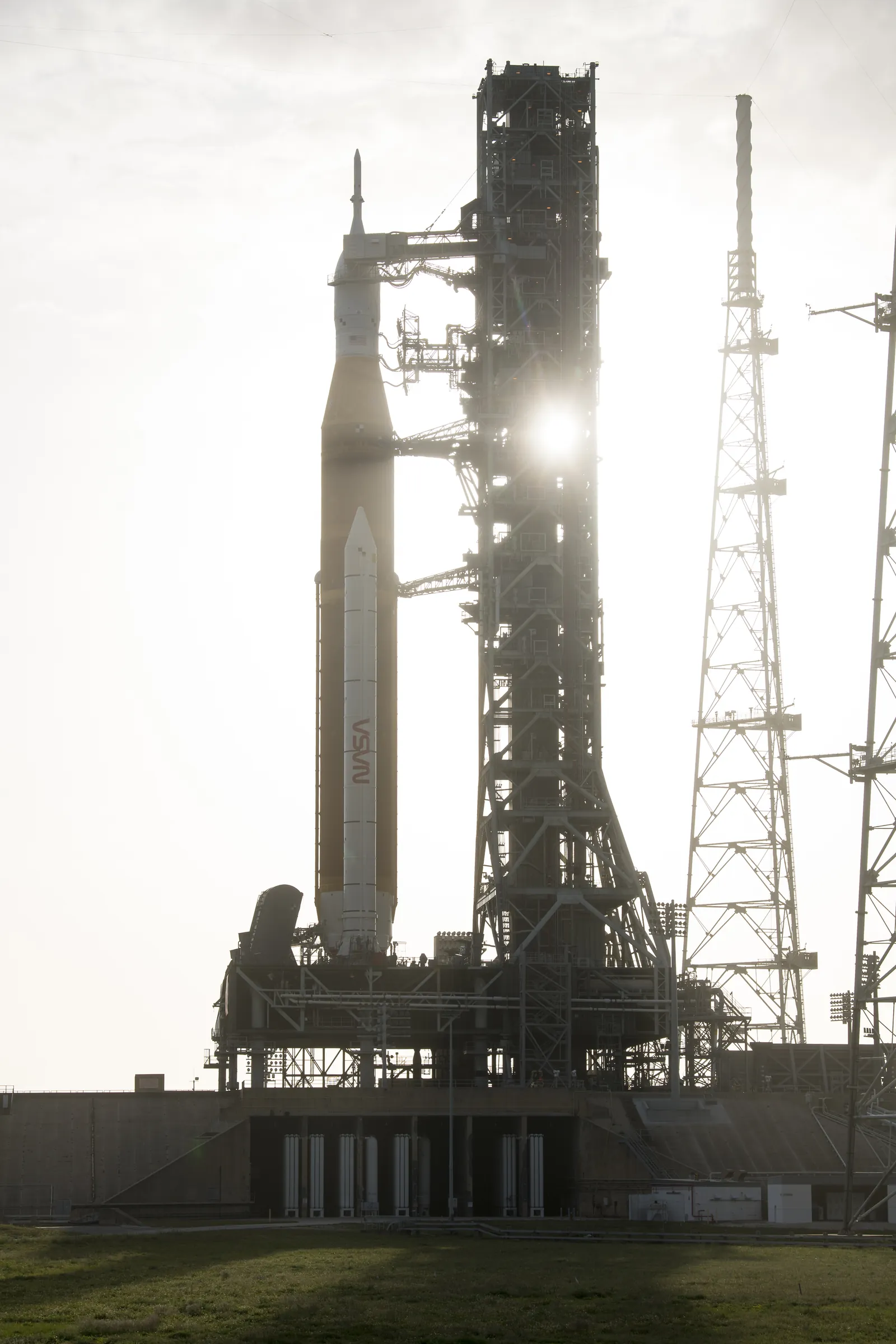
The Artemis I Space Launch System and Orion on the mobile launcher at Launch Complex 39B, April 2022. Photo: NASA/Aubrey Gemignani. Public domain. Source file. 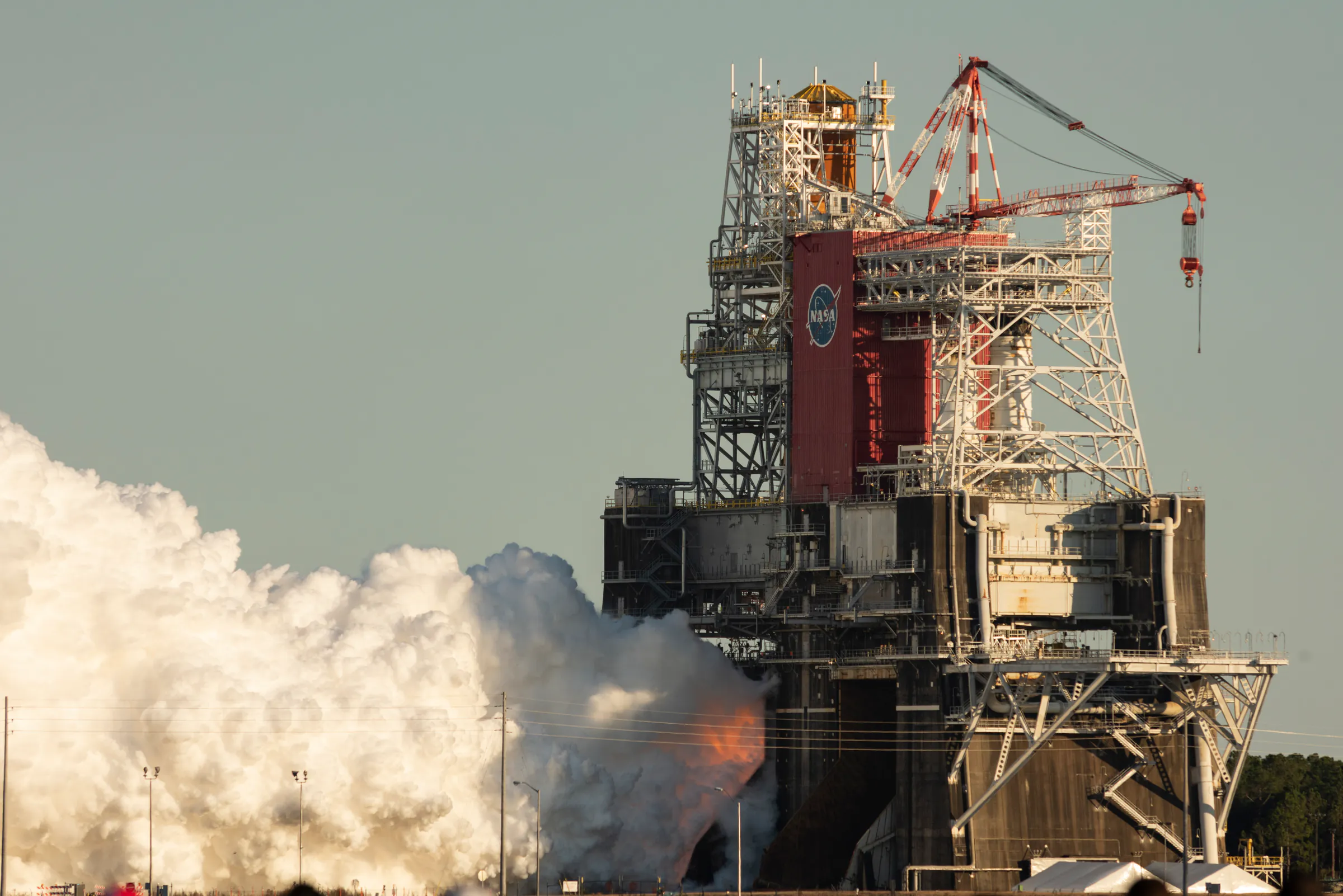
Hot fire test of the first SLS core stage in the B-2 Test Stand at Stennis Space Center, January 2021. Photo: NASA/Robert Markowitz. Public domain. Source file.

