
Reconnaissance
SR-71 Blackbird
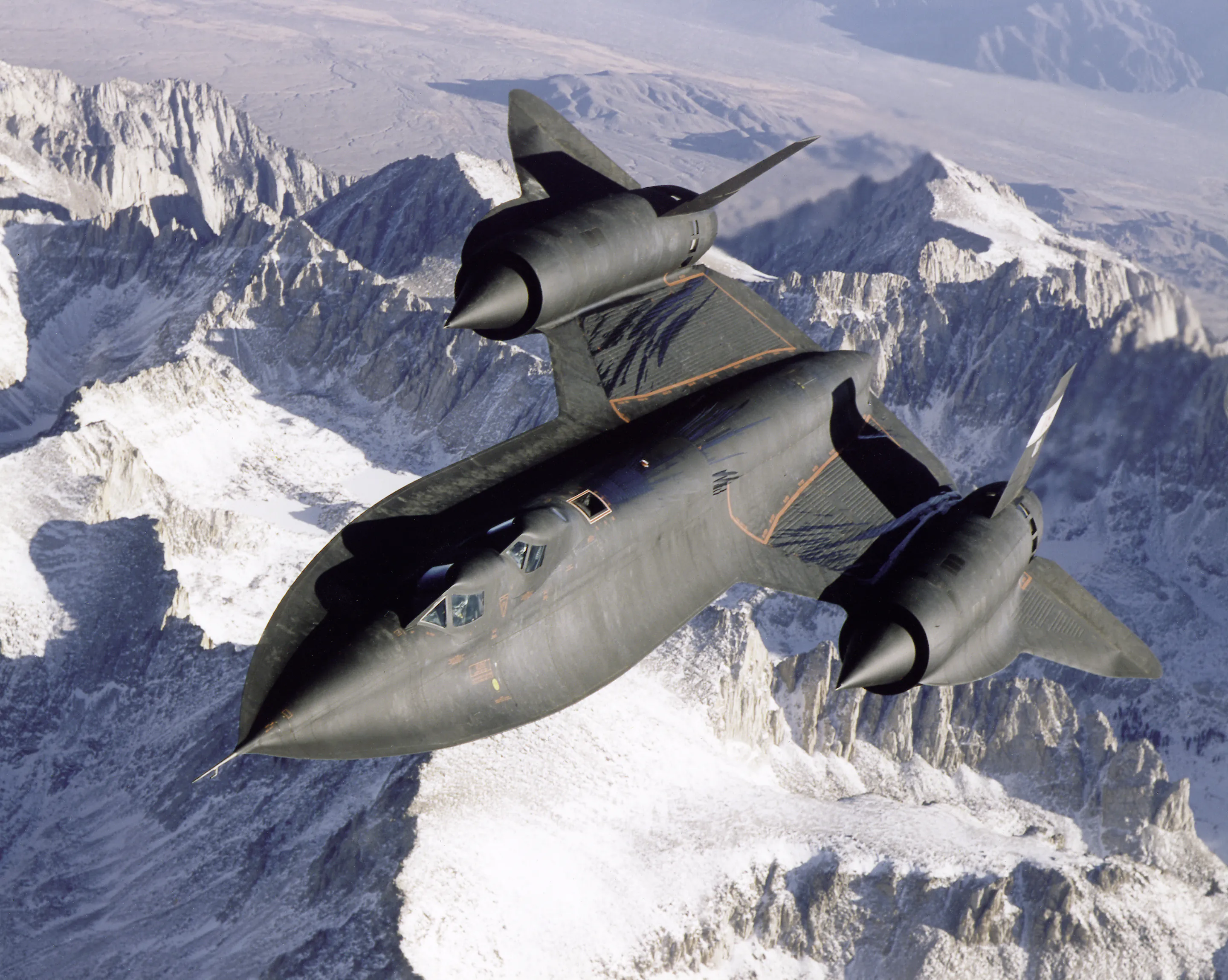
A twin-engine, long-range strategic reconnaissance aircraft designed for sustained flight above Mach 3 and at very high altitude.
- Maximum speed
- Mach3+
- Service ceiling
- 85,000+ft
- Range
- 2,900+mi
- First flight
- 1964

Overview
- Manufacturer
- Lockheed
- Country
- United States
- First flight
- Variants recorded
- SR-71A, SR-71B, SR-71C
- Status
- Retired
Engineering analysis
Aerodynamics
The SR-71 was designed for sustained Mach 3 flight, with prominent chines, a slender planform and inlets that manage the airflow reaching the engines. NASA later flew it to study aerodynamics, stability and control, and thermal loads at speeds up to about Mach 3.2.
Propulsion
The J58 installation had to handle inlet shock waves over a very wide speed range. Movable inlet hardware and bypass flow kept the engines running at Mach 3+, where the Blackbird cruised on continuous afterburner and got its best specific range.
Structures
Sustained Mach 3 flight heated parts of the SR-71’s skin to about 600°F, too hot for a conventional aluminum airframe. Lockheed used titanium alloys extensively, and thermal expansion and strength at high temperature became central structural constraints.
Specifications
Dimensions and weights as published, with the basis of each figure.
SR-71 Blackbird dimensions and weights
| Parameter | Figure | Basis |
|---|---|---|
| Length | 107.4 ft32.7 m | |
| Wingspan | 55.6 ft16.9 m | |
| Empty weight | 67,500 lb30,620 kgApproximate | Approximate |
| Maximum takeoff weight | 172,000 lb78,020 kgApproximate | Approximate |
Published figures are shown as recorded. The figure under each one, in the other unit system, is converted by ORBIX and rounded to four significant figures or one decimal place, whichever is coarser. A figure with no qualifier is a published or nominal value.
Propulsion
The SR-71 Blackbird is powered by two Pratt & Whitney J58 turbojets. Thrust figures in the table are per engine.
SR-71 Blackbird engines
| Engine | With afterburner | Type |
|---|---|---|
| J582 engines, Pratt & WhitneyTurbojet | 32,500 lbf144.6 kN | Turbojet |
Performance
Published figures for the baseline aircraft. Range depends on load and fuel, so it is a reference value rather than a mission figure.
SR-71 Blackbird performance
| Parameter | Figure | Basis |
|---|---|---|
| Maximum speed | Mach 3+Published minimum | Published minimum |
| Range | 2,900+ mi4,667+ kmPublished minimum | Published minimum |
| Service ceiling | 85,000+ ft25,910+ mPublished minimum | Published minimum |
The source gives no basis for the range, such as fuel load or tanks. A plus sign after a figure marks a published minimum.
History and variants
Each variant in the record in order of first flight, with its status. Variants with no first-flight date in the record come last.
SR-71 Blackbird variants by first flight
| Variant | Status | First flight | Notes |
|---|---|---|---|
| SR-71ARetiredFirst flight | Retired | Primary operational reconnaissance variant. | |
| SR-71BRetiredFirst flight not recorded | Retired | Not recorded | Dual-control training variant. |
| SR-71CRetiredFirst flight not recorded | Retired | Not recorded | Single hybrid trainer assembled from existing Blackbird components. |
Photographs
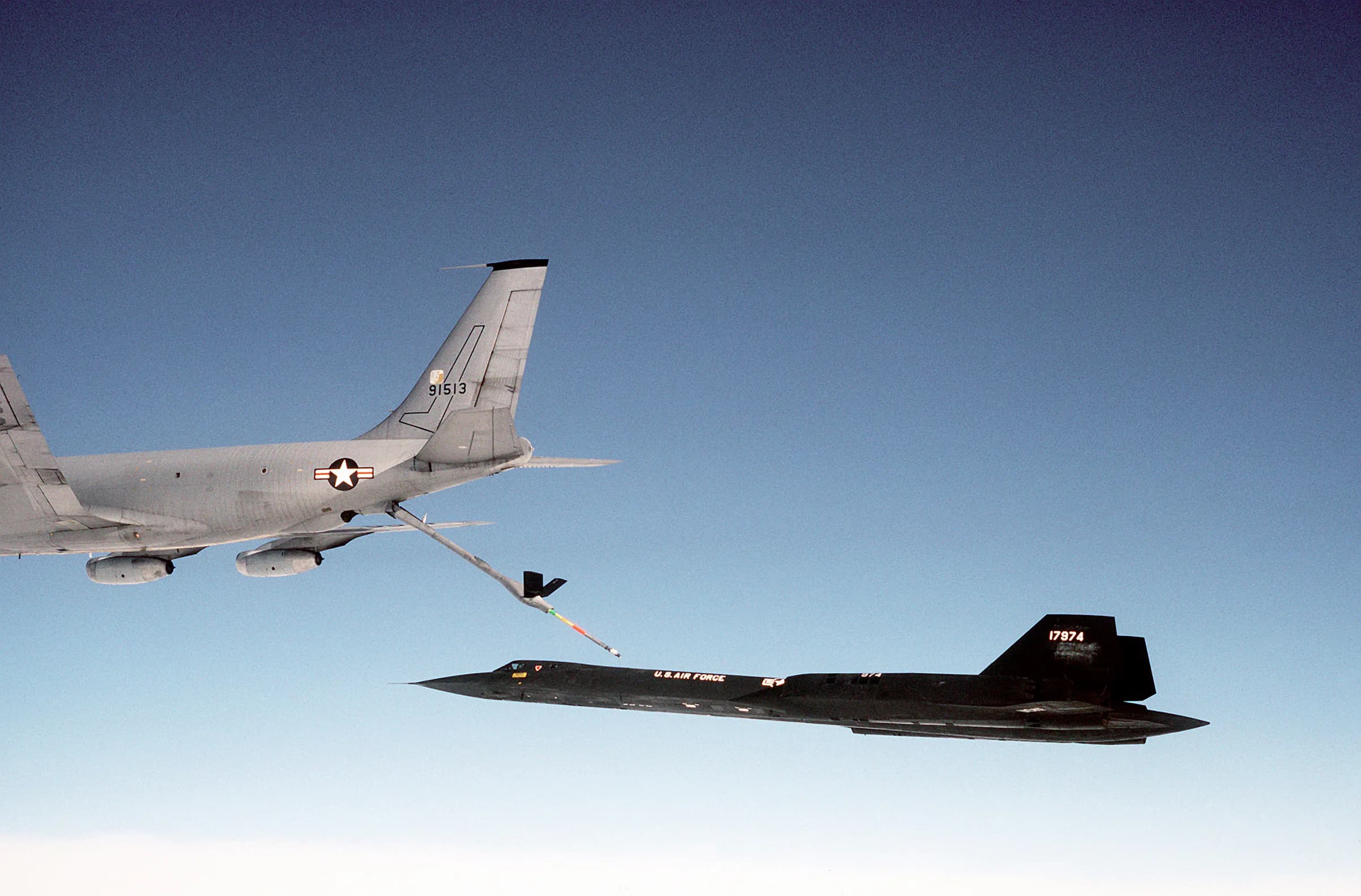
SR-71 (61-7974) moving toward a KC-135Q Stratotanker for in-flight refueling, 1983. U.S. Air Force photo by Ken Hackman. Public domain. Source file. 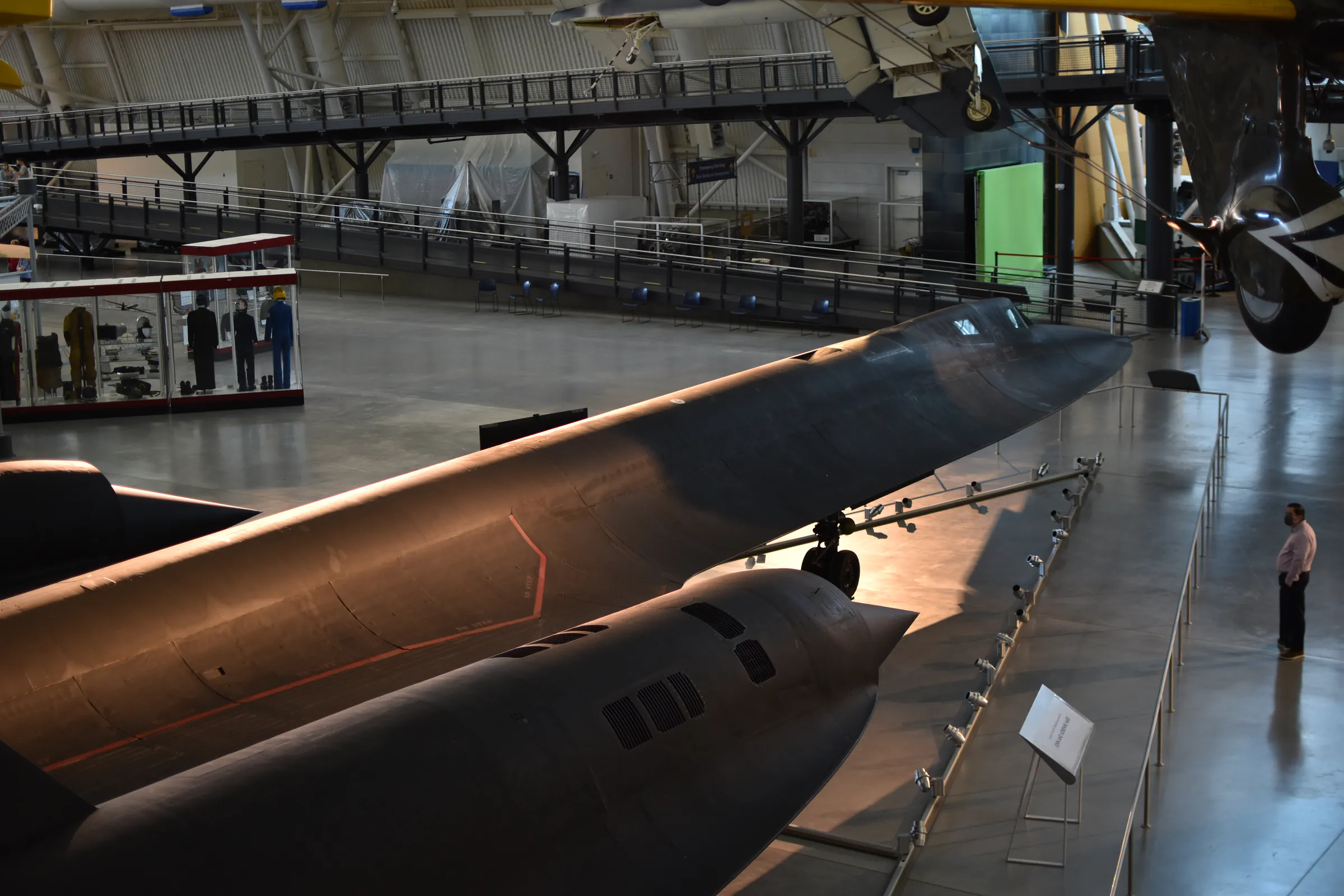
SR-71 Blackbird seen from above at the Steven F. Udvar-Hazy Center, Virginia. Photo: Northern-Virginia-Photographer. CC0 1.0. Source file. 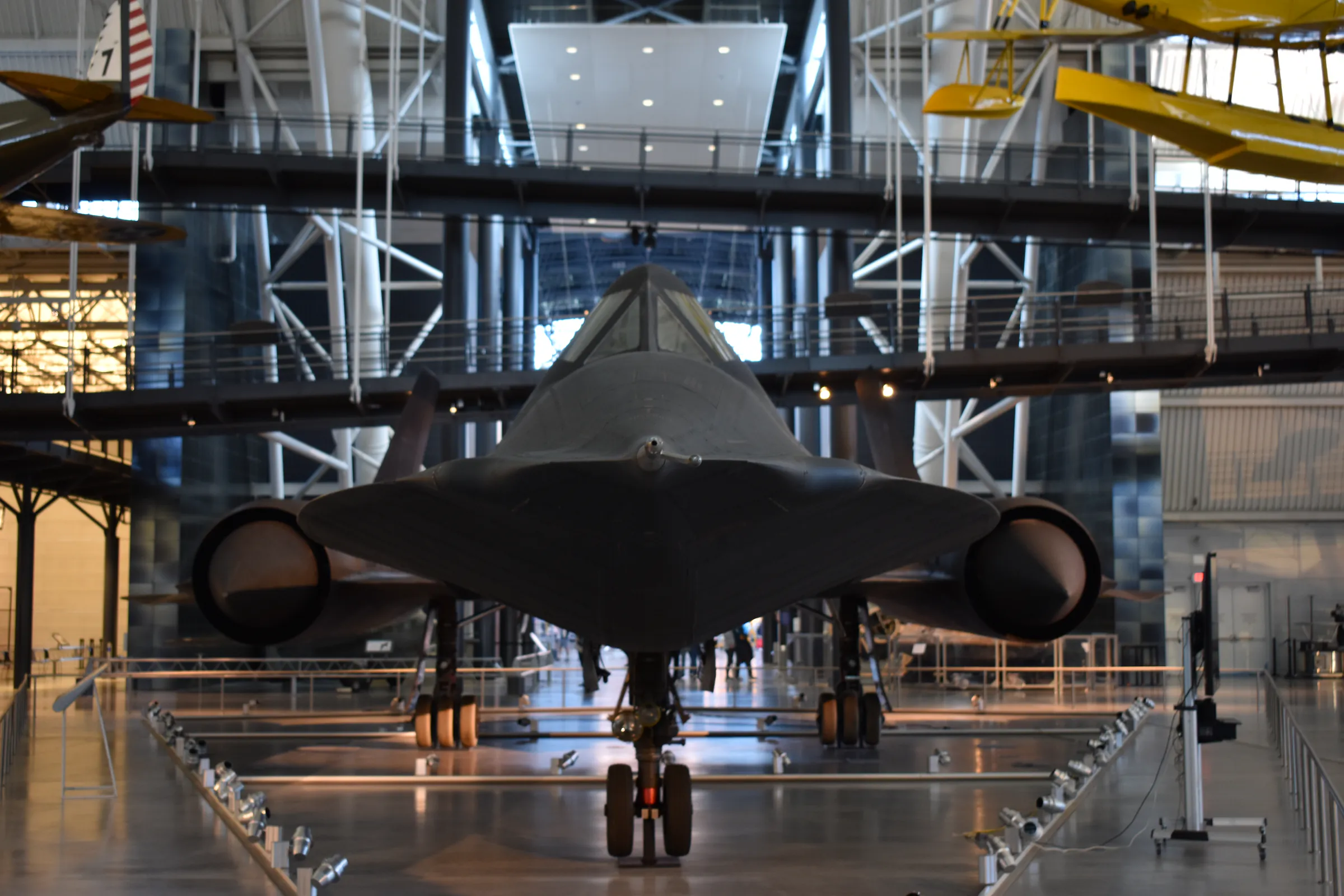
SR-71 Blackbird seen nose-on at the Steven F. Udvar-Hazy Center, Virginia. Photo: Northern-Virginia-Photographer. CC0 1.0. Source file.


